
Category Archives: Sales

americanflag-1qe9980 (1)

What does Freedom Mean to You?


What is freedom in our business and our life?

Freedom means many things to many people. Today we will focus on the mindset of freedom in our business and how it can empower you.

Many times we are motivated by the search for freedom and the relief that we perceive freedom to be, whether it’s a day off or a vacation in the woods.

What are some of the ways that we search for freedom in our business?


To be debt free?

To work toward retirement
To have a day off

To turn off the phone for an hour, a day or even longer

To have less to take care of

To have more time

To be less scheduled

To have less responsibility

To have more play time

To spend more time with family and friends

To have a large bank account.

To take a vacation

Being in “control” of your life and what you want to do

Which side of the coin do you want? 

There is a difference between what it means for us to be free from something and to be free to do or be something. Freedom from and freedom to are two sides of the freedom coin. Know this and you will understand how you are motivated! In NLP we know that people are usually motivated by moving toward a goal, or away from that which makes us uncomfortable.


Freedom From-Turning the phone off gives me freedom from interruptions and stress

Freedom To-Staying on schedule gives me freedom to have more play time.


One of the greatest insights we can have is to observe for ourselves what we mean by freedom and what we are searching for. 

Many times we think that Freedom will solve a problem for us. If we are deep in financial debt and start working our way out of it, we envision a freedom day where we will jump for joy and cut up all of our credit cards.


Freedom is often not in our physical space…after all, none of us is tethered to a desk. Freedom lies in our imagination, a horizon that we long for, a dream, or as we say in coaching “visionary reality.”


Sometimes Freedom IS in our physical space. I long to have fewer possessions and more clarity in my household. I love this definition of minimalism. “ A tool to rid yourself of life’s excess in favor or focusing on what’s important-so you can find happiness, fulfillment, and freedom.”


Clarity is Freedom

There is true freedom in being able to see what is right in front of us with clarity. As I was mulling over freedom this weekend, I came across a blog on living with less. One of the things it proposed was to go in each room of your house and count how many things are in each room. I realize that I spend to much time looking for things, and buying extras of what I already have. (Have you ever mapped out where everything is at in your office? That’s on my freedom list this week)


Our numbers tracker tool is a great tool for clarity. When you know your personal formula for what it takes to get a listing or a sale, there is no fuzziness around why business is not proceeding the way you hoped. There is freedom in that and relief from worry. Actions=results.


Clarity would be planning days off in advance. Freedom does not often come from simply being a boat adrift. Many of you have experienced this as your work days run together with no vacations or days off.


Make a list of where you long for more freedom. Create a freedom plan. If you need time to drift without a plan, plan for that!


Freedom comes from multiple points of view

Our limits are only in our mind. When we think external events are causing us problems, it is our thoughts about these events that cause us problems, not the circumstances themselves. We use conditional dialogue like, “when I get my taxes done, then I can be happy.” when it’s really our thoughts about our taxes, not the physical act of doing them. We program our brains/thoughts every day.  Seeing things in new ways from new perspectives is the freedom to choose your attitude. In the words of Owen Fitzpatrick, “One of the most important freedoms we have is to see one situation from multiple points of view.” How often do we take the time to practice this?”


(Hint: an election season is the perfect time to practice this)


Creativity leads to Freedom

The co-founder of NLP, Richard Bandler says, “ To me, freedom is the single most important experience that human beings can have. It is the act of creation itself-not just creating great things like art and music, but creating the great moments of your life.”


Stress and worry stifle creativity. When you can reinvent your business on a regular basis, there is such a freedom in that. What other job allows for this?  Moving away from the norm, having clarity, questioning what works and what doesn’t, stepping out of our comfort zone…these are all freedoms that he have in Real Estate. So you can make the mental choice…will you be free today or live in some imagined servitude.


If you want to be more free..

Owen Fitzpatrick says, “ If you want to be free or if you want to bring more joy into your life, you must choose to change in certain ways. You must choose to learn about freedom. You must choose to learn about change. You must choose to learn about how you experience your problems. You must choose how you experience your relationships. You must choose how you understand the universe. You must choose how you act, you think, and live.”


Make your freedom list. What freedom do you dream of? Freedom is a great motivator.


Are you preoccupied with your limitations? Your limits are only in your mind…and your mind belongs to you. Play with life. Be like a child on the playground. It’s what we think about our business and circumstances that causes us problems…not the circumstances themselves. Having the mindset of freedom gives us a vast ability to grow
 

Increase your Confidence with this NLP Exercise

Brinley Platts, co-author of Building Self Confidence for Dummies defines confidence this way, “ At it’s heart, confidence is the ability to take appropriate and effective action in any situation, however challenging it appears to you or others.”

As Real Estate agents, a lost listing, a crazy making client, or a slow month can cause our confidence to wilt. The strategy is often to get ourselves to a convention, or listen to a podcast, where the energetic speaker inspires with a rags to riches story or a new technique or skill.
We are now pumped up and FULL of confidence. This lasts for a while and then something derails us and we slide back down the scale. Seeing a fantastic speaker is a great experience, but it’s not long lasting and it’s not intrinsic. It’s a veneer that can wear away over time.


Here is just ONE of MANY NLP techniques you can use on a regular basis to increase your confidence on an internal level. Once you have the process down, it will only take you a few minutes a day.

1. Write down where your confidence is right now on a scale of 1-100 with 1 being the lowest and 100 being the highest.
2. Imagine that you are about to be interviewed by your local news  reporter about everything you have accomplished in your life from grade school to the present moment. To prepare for this interview you go into a room and put down a pad of paper, get a pen and start to writing down all your accomplishments, all the way to back when you were a child.The things you write down may be the AMAZING art work your parents proudly put on the refrigerator, a graduation, a marathon, work projects, weight loss…all the things you are proud of. Look at grade school, summer jobs, all the things you are proud of. Imagine yourself writing at the table.
3. See yourself in a chair at a table in a room divided in two  with a glass wall. On the other side of the glass wall, there is an identical chair and table. Now see your essence/spirit float through the glass and see yourself sitting in the chair, at the table, on the other side of the glass. You can see yourself on the other side of the wall, writing down your accomplishments.
4. Also, on the other side of the glass, as you do that, someone from your life is standing right beside you. Someone who loves you or someone who values you highly. It could be a person, or your favorite pet. On the other side of the glass you step into their body and observe how they see you, hear what they think about you, and feel the depth of their love thoughts and feelings for you. When you have all three….
5. Imagine yourself stepping out of their body, now float back through the wall and your spirit steps back into your body. When you step back into your body it changes things. You can now see how they see you, hear what they think about you, and feel the depth of their love, thoughts and feelings for you internally. Anchor this experience by pressing on your knuckle.
6. Quickly write down where your confidence level is right now on a scale of 1-100.

When you look at where your confidence was at the beginning of the exercise, did it increase? This is self esteem and confidence that is authentic and will give you a great life.

Write a Letter to the Future


Subtitle: love who you have become a year from now

Why take the time to write a letter to your future? There are many good reasons to do this, and agents who have done it have reported amazement  when they see their letter in a year and realize that they have set in motion a path to their future.

The letter to the future is a way to create a marker in time where you will shine and have developed into the person that you desire to be. You may be asking “how” you can possibly know what will have happened a year from now. Well the good news is, you don’t have to know. This is a dreaming exercise, similar to the one we do at the Disney workshop at our Your Coaching Matters events. You don’t need to know how, or all the things that could be pitfalls along the way…you only know that you have a desire that you would deeply love to fulfill.

The letter creates a movie that lives in your unconscious mind- and the more you practice the part you want to play, the more you will begin to simply believe.

Here are some steps you get you started!

  1.  Write the letter in first person, second person or third person.
    1st person would begin something like: As I stand here December 2016
    2nd person would begin something like: Donna, you did so well last year at growing
    3rd person would begin something like: She became a hero to herself in 2016.
    (Most people who do this exercise seem to prefer 2nd person)
    * Fun Exercise: Try writing in all three voices and see how it changes.Look back or look forward, your choice. You may prefer to write the letter as if you are looking forward at coming attractions or have traveled into the future and are looking back. “Susan wants you to know that in Dec 2016, she have exercised over 200 times and tracked it.
    “As Susan looks back she remembers the day in December 2015 when she started     consistently using numbers tracker and now a year later, she is celebrating with her staff at their favorite restaurant.”

2.   In NLP ( Neuro-Linguistic Programming) we look at timelines as a powerful way to create an exciting future as well as overcome limitations from the past. You can physically use this exercise to to take a tour of your timeline and help solidify your letter. Take several pieces of paper and put them on the floor as if you were rolling out a magic carpet. Write Dec 2016 on one of the pieces of paper. Depending on whether you are looking forward or looking back from December 2016, the piece of dated paper will be closest to you or the last piece of paper. Step onto the 1st piece of paper and shut your eyes and allow yourself to see your timeline as a river. You are floating above it and looking down on the place you will be a year from now. What do you see?

3. Get out your Standards of Integrity. Here is your opportunity to be all of the qualities of being that are near and dear to your heart. Look at your list. If you were being those qualities, what would you be doing? Who would you be with? Where would you go?

4. Review your Life Intentions. What was an important goal to you last year may have shifted. Discern 2 or 3 of your top Life Intentions or have your coach guide you. If one of your top Life Intentions for instance is to be Financially Successful, dream about what that could look like a year from now. Who would you be with, what would you be doing, where would you go?

5. Who are the most important people in your life? Name 4 or 5 people, family members, mentors, friends, coaches and put them in your movie. Imagine them supporting you and cheering you on.

6. What are you excited about? What has excited you in the past? Be wildly ambitious, and take a no holds barred approach to who you would want to be.

7. Make it an action movie. a romance or a comedy. The letter will tell a lot about you. Whatever theme you choose, make sure there is plenty of action to keep the audience ( you) interested.

8. Give yourself some loving. If you were starring in a movie, you would build up the main character. Acknowledge yourself for you will will be in the next 12 months. Be proud and appreciate. And don’t forget to be grateful for a life well live.

9. What would you like to let go of or release? This is a process that Donna Stott will go over in more depth at the end of the year call.

10. Sign your letter and date it. Share it with your coach and celebrate together. Email it to yourself for future delivery at futureme.org. If you would like to have your letter stored and mailed to you a year from now, you can use a service called dearfutureme.org

IMG_4517 (1)

The Beginning of a Bullet Journal


Notes, napkins, computers apps, spreadsheets…I have tried it all in my quest for the perfect system to keep my life centralized and organized.

Any Real Estate agent who has ever written down a phone number on a scrap of paper and found it months later under the car seat, realizes the importance of collecting information in a meaningful way.

And then this year, I made a HUGE discovery called The Bullet Journal. Don’t ask me how I found out about it, I have not a clue. In the avalanche of things that grasp for attention, this was one system that intrigued me. And it wasn’t just a system, it was a movement, a virtual cult. A slow down to speed up way of putting my brain on paper.

I’ve always known, I’m an analog girl in a digital world. While I embrace technology, device reading is not as enjoyable as have a physical book in my hands. The same seems to hold true for staying organized. I’m excited about a blank book, a pen, and an old school system that is also a new way of mind mapping.

Check back because over the next few months, I will be sharing the Bullet Journal as it evolves.

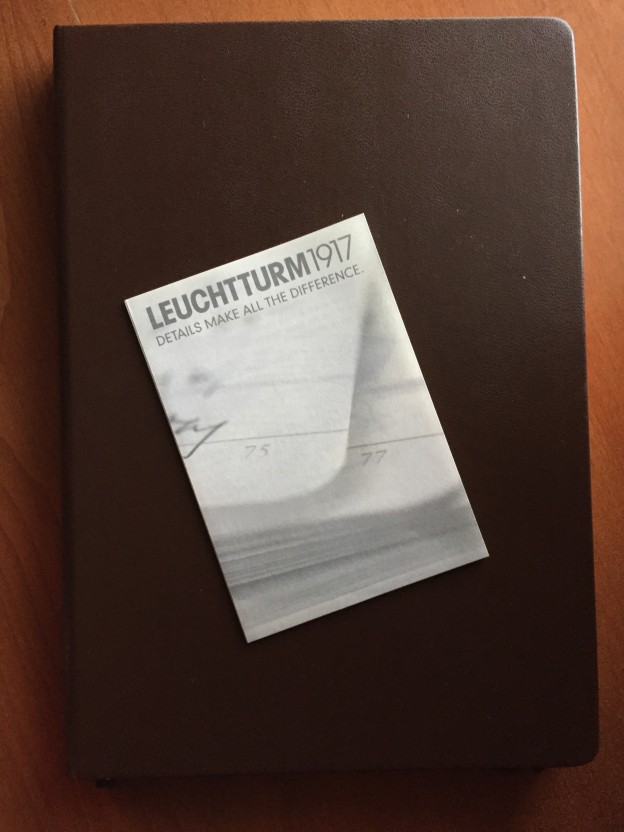
The Bullet Journal is a flexible process and you can get started with a blank Moleskin or other notebook you might have around.  I got geeky and read a bunch of blogs and then I could accept nothing less than the gold standard of journals, the German made LEUCHTTURM1917 dotted. They come in a beautiful array of colors, but don’t expect to get one delivered quickly because they quickly sell out due to demand.

Get started with the basic Bullet Journal process by watching this video.  http://bulletjournal.com/

The appeal of the bullet journal is slowing down to speed up. Stay tuned.

IMG_4565IMG_4542


Where’s Waldo? The Neuroscience of Finding Leads

Where's Waldo? How to use neuroscience to filter what's important

Where’s Waldo? How to use neuroscience to filter what’s important. Source: Playbuzz.com

Are you familiar with the popular series of children’s books “Where’s Waldo?” Each colorful book invites us to look at pictures crowded with people and we are challenged to find Waldo by looking for his distinctive red and white striped shirt. in the exercise of looking, we become totally focused, filtering out other colors and images until we find Waldo.

“Where’s Waldo” is a great metaphor for how we handle leads and  filter information.  Regular prospecting creates a large database of potential buyers and sellers for lead follow up.  As agents, we try to discern which one is Waldo, the brightest prospect who will pop out and gain our focus and attention. Our Waldo is a viable lead who will take action in a reasonably short period of time…if we can find him.

As an example, let’s look at an agent who is skilled and diligent at setting a daily lead generation goal and starts hitting big numbers in terms of contacts. This creates increased demands on the agent’s brain and scatters his or her attention, as the agent tries to focus on multiple leads at once. Which lead deserves focus and attention? Often agents will start to follow up randomly and haphazardly instead of taking the time to pay attention to ONE CLIENT.

In the book, The Organized Mind, the author says, “To pay attention to one thing means we don’t pay attention to something else. Attention is a limited capacity resource.” In other words, we cannot possibly give the attention to everything at once. We need an attention and intention filter.

On a recent coaching call, I worked with an agent who is successfully using an auto dialer to make prospecting calls and has an opportunity filled database for follow up. And yet, how does he get to them all?

It’s important to put attention on the  leads within your database based on WHEN they will make a decision to list or sell. Push the long range leads back and have an assistant sent them a handwritten card. When you can use your attentional filter to focus on your brightest and most motivated leads, your Waldo’s come to the forefront.

Find the leads, Filter the leads, Focus.


The role we unconsciously play- Persecutor

The Persecutor

The Persecutor

As one of the roles in The Drama Triangle, the Persecutor can be the agent or the client. The Persecutor is sometimes authoritarian, which may sound something like, ” The is the price I will list at, or we won’t be doing business together!” The Persecutor may be highly critical which may sound something like, “This house will never sell!” So you can see how the role could be you as the agent, or the client could also be in this role.

Someone who is used to playing this role will treat the other party like a victim or a child. An example would be a client who asks a question the agent thinks is silly. The agent goes into the role of Persecutor and treats the client as weak and helpless. While not stated overtly, the agent may become condescending every time this client calls and talk down to them.


The Drama Triangle

Superman Drama

Superman Drama


In NLP, The Drama Triangle refers to roles that play out in highly charged situations. Each and every client we work with comes to us with a strategy for the sale or purchase of a home. This operates like a movie storyboard or a life script that may  run a strategy in many areas of their lives.  Being a part of this movie script prevents equality in the relationship and will go for as long as one of you is willing to play a role.

The Drama Triangle refers to three roles in the strategy of power, responsibility and vulnerability. The roles are played on an unconscious level, as a matter of fact, you may be playing one right now as the agent and not even realize it. When we buy into the drama of any situations, it can escalate problems.

The three positions are:

The way these roles interact with each other happens in a way that self perpetuates. The Persecutor will blame the victim, the victim feels oppressed, the victim will find a Rescuer, when the Rescuer cannot save the victim, guilt will follow  and the Rescuer may take on the role of a permissive and attention giving parent, which reinforces the victim who is seeking attention.

The Rescuer who has failed, now takes on the role of the victim. ( Ever tried to save a deal, failed and went into victim mode?) The person who was originally the victim, now takes on the role of Persecutor and criticizes the person who was trying to rescue them. ( The client who is now angry because their deal fell through changes from victim to persecutor, blaming the agent for everything that went wrong)

As you look at your own role as an agent, are you checking to see whether your are rescuing your client, playing the victim, or persecuting your client? What action do you need to take to stop the cycle?


Should you rescue your client?

Superman Drama

Superman Drama

As Real Estate Agents, we  aspire to bring our best self to our clients. Aside from personality layers and belief systems, we are all decent people who simply want the best for others. If was saw one of our clients needed our help, we would not hesitate.

Sometimes agents can take on more than their fair share of the work involved in selling a home. They go into “Rescuer” and “Fixer” mode. You might have gone overboard if you are:

  • Reducing your commission several times a year to put a deal together.
  • Purchasing furniture from the client because it doesn’t fit on their moving truck.
  • Having many conversations to “save” your deal without letting the other agent or the client be part of the solution.
  • Buying a client an overly extravagant gift that makes them feel uncomfortable.
  • Getting involved in the emotions and drama of the deal
  • Buying into a client’s story and repeating it to stir the pot.
  • Not taking care of yourself, so you are stressed and on overload when you try to help the client
  • Being overly attached to the outcome and feel responsible for everything.
  • Having the thought that they don’t know what they are doing.
  • Feeling guilt if you don’t try to rescue them.
  • Worrying about your client and being overly empathetic.
  • Telling people the dramatic story of how you rescued someone!

On some level, all of our clients want us to support their strategy or system. You too can be drawn into their world if you allow it. If they have a strategy of being a victim and you have a strategy of being the rescuer, you will meet and the relationship will one of co-dependence. If any of the above apply to you, it’s useful to talk to your coach and observe what makes you want to rescue people. Do you have a fear of losing control? Are you validated by rescuing those you see as victims?

The agent who rescues a needy client reduces the client’s power so that the client shows up in a weak state and will ask the agent for emotional or financial help at every twist and turn. I know an agent who got so caught up in being a rescuer, she was mowing her clients grass and cleaning their house at no charge!

It’s very similar to a parent/child relationship where a marshmallow parent rescues a child by allowing them to do whatever they want ( clients) without allowing them to step up to be responsible for their actions.

The language of the “Rescuer” is ” Let me help you”. On an unconscious level, we expect clients to fail if we are trying to rescue this person and see them in the “Victim” role.

There is frantic activity when we are trying to rescue someone. When we are frantic, we make our clients frantic. Maybe clients have their own super powers.

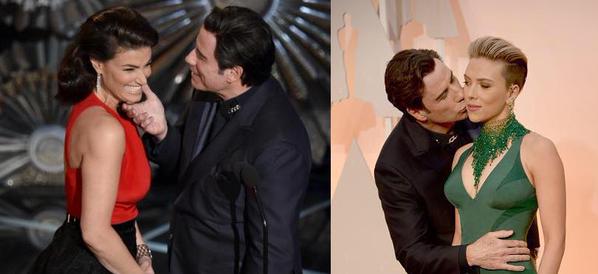
When Body Language Goes Bad

How do we know when body language goes bad? In NLP, the meaning of our communication is the response we get.

Kind of obvious that something went wrong here. Whether presenting an Oscar or winning sales, we are always communicating something with our body language.

It’s a critical part of communication to have the sensory acuity to sense when we are in someone else’s personal space. When the space is violated, the response is clear…the other person may stiffen or express discomfort with micro expressions.  Most body language experts agree that 36″ or more  is a recommended distance  for social and business encounters. Anything closer is for personal and intimate encounters with loved one and personal friends.

Touch is something to use very carefully and only if in rapport. A touch on the shoulder or arm is fine for reassurance if the other party is kinesthetic and you have developed TRUST. Never assume it’s okay to touch someone until you absolutely know you are in sync. How do you know? You are mirroring and matching, focused on the other person and taking in the subtle clues of rapport.

Now, no one reading this would ever get so inappropriate as this on a client appointment. This extreme example is just a good reminder to respect others space. It shows respect and professionalism.


B-hp5WzIIAAdXoa

The Curious Presentation

stock-photo-18804553-3d-man-with-question-mark

YES, curiosity is important when doing a presentation to buyers or sellers. You can automatically test the level of interest in whatever you are presenting based on whether you are getting the sensory feedback and behavior indicating that your client may be curious. They will lean forward a little and their eyes will be tracking what you are presenting to them.

What I’m going to ask is more related to self curiosity. How curious are you about THEM? Because the only thing we can really control in a client situation is our own state and our own behavior. We can’t force them to be curious about what we are presenting unless we have an interest in them.

Notice that whenever we are curious, our senses are focused on that which has our attention. When we become curious about clients, we are more interested in them than our own self talk.  We get a holiday from all of our (very normal but not always helpful) internal chatter about how we might persuade them or what we are going to have for dinner as soon as we leave. Clients know we are curious when we are giving them the body language and eye contact that is congruent with curiosity. The language patterns of curiosity are simple..” I’m curious”, or “tell me more about that…”

Curiosity means we are not telling/selling, we are ASKING questions.

Being curious is optimal in these situations:

  • If you have a buyer or seller who is angry or is very critical of something. For instance, the seller who calls to say you are not advertising the home enough will shift once you start to be curious.
  • When things don’t turn out as we planned. Ever have a buyer who has changed their mind? Instead of being reactive, get curious! It puts the focus on them.
  • We forget something or make a mistake.  Don’t you hate that moment when a detail gets overlooked? Being curious causes us to shift our attention away from blame and guilt and into something better.
  • We find ourselves going negative or getting cranky. The fastest way to shift into a better state is to get curious.

Honest curiosity is a gift to our clients.

Watch for next week’s blog on the NLP curiosity installation process…