Category Archives: Word Power

Grow your Sales with "Yes Sets"

Grow your Sales with “Yes Sets”

Grow your Sales with "Yes Sets"

Grow your Sales with “Yes Sets”

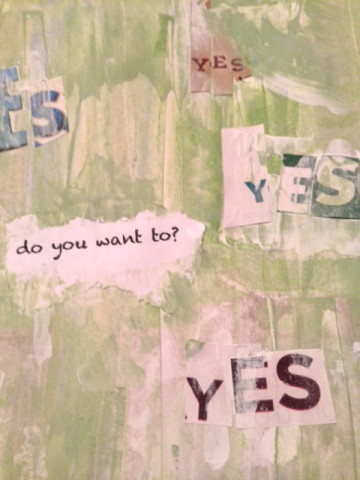
Would you like to learn a skill that will grow your business? Was that a YES I heard? I just ask a question that did not require a lot of thought or analysis and the answer was easy for anyone committed to expanding and growing their sales business.

“Yes Sets” are questions are small sweet steps leading the client to move forward with less resistance. In NLP we call it an agreement frame.

Example:

Client: I want to wait until Spring to list my house.
Salesperson: You want to wait till Spring, I can appreciate that, wouldn’t you like to be IN your new house by Spring? (Yes)
Are you tired of waiting to get this done? (Yes)
Isn’t it time to pick an agent who can get you results? (Yes)

Some of the most common “Yes Set” questions are:
!. Can you imagine_____?
2. Do you want a better/faster/quicker_____?
3. Are you tired of waiting/same old ______?
4. Are you interested in_______?
5. Has there ever been a time when you_____?
5. Did you ever notice_____?
6. Isn’t it time to_____?

Use “Yes Sets” with the Rule of Three. For each yes you get, move forward with another “Yes Set” question. The unconscious mind operates on a consistency principle which calls for congruent decisions and statements. It quickly evaluates whether answers are in keeping with past responses.

Tie Downs or question tags are also useful “Yes Set’s.
Example: The quicker we get your house on the market, the faster you will be in your new house, does that make sense? (Yes)

Tie down questions are add ons at the end of a statement that lead to more agreement.
1. Does that make sense?
2. Okay?
3. Wouldn’t that be great?
4. Do you know what I mean?
5. Doesn’t it?
6. Shouldn’t you?

Watch for “Yes Set” body language. A yes may be accompanied by a subtle up and down head nod, a more relaxed posture and uncrossed arms.


The decision making brain

Decision

Decision

Whether you are looking for your own authentic direction or helping your client make decisions, one of the fundamentals of NLP is to provide choice in decision making. Each person has a strategy for making decisions, and we run our strategy the same way over multiple situations whether it’s purchasing a car or buying a house. You decided your strategy long ago and in the sidebar of your mental map there is a chattering internal discussion about all the options, jumping from thought to thought like a monkey in a tree. (More on decision strategies next week.)

Let’s pretend we have a choice to make, perhaps a large decision like changing companies. Which way do we go? We obsess ad infinitum over the attributes of the choice, the dangers, the timing, and what other people will say. Recent studies have shown that the process of making decisions can exhaust the brain. http://www.scientificamerican.com/article.cfm?id=tough-choices-how-making. The longer the decision making process goes on, the harder our brain has to work and the harder the brain works,the more frustrated we become. If you’ve ever been sleepless at night over a decision, you know the feeling of relief when a decision has finally been made. Ah, the brain says, at least now I can rest.

NLP offers us many tools for finding the internal strategies and resources we all need to make decisions involving all the parts of our brain. The most important resource is typically right inside us…we are the answer to our own problem.

Can you imaging the value you bring to a client by providing a way to zero in on their strategy and help them make a decision before they reach the point of exhaustion and frustration?

Last week we looked at the power of the little bridge we call “or”. Another NLP language pattern called double binds uses the word “or” and helps guide decisions. This is not about guiding the decision where YOU want them to go, it’s about listening to the client and putting it in a bind format so they can go where THEY want go.

It might sound something like this: “I’m not going to give my house away and I’m willing to wait until I get my price. If I have to make double payments for a while, I will.”

Since there is a lot of fear going on with the client, you might want to give them some relief. “ Would you rather sell the house now and get moved or give it away six months from now? Because it’s factual that the longer a house sits on the market, the less it will sell for. What do you really want?”

The client’s brain will sit up and say, “Oh, the fear could become greater if we wait.” As the agent, you need not worry, this is not manipulation. You are merely getting to the point and helping the client make their own decision before their brain becomes too tired to function. (By the way, when people say they want to sleep on it, that’s a strategy to get some space for their brain to rest…not necessarily a bad thing, it’s part of a strategy). People want to make the best decisions for themselves on a deep level…you are giving them a gift if you can help them find the answer within themselves.

You can learn more about double binds and the language patterns of cause and effect in NLP2 class. Watch my site for upcoming dates.

Mechanicsburg, Pa

How One Word Can Provide Clarity in Sales


Bridge to Clarity

The Bridge to Clarity


Have you ever wished you could give clarity to a client’s conversation? When you ask a client what they WANT ( or anyone for that matter) out comes a jumble of wants, needs, and fears. What is it, out of all that that they REALLY want? When someone is making a choice, it often sounds like a very noisy internal conversation. The greatest GIFT you can give them as a salesperson is a way to move forward.

You can help people with a simple language pattern that hinges on one word. Listen carefully for some of the phrases and terminology clients are using to express what is coming up for them.  Simply ask them what they are most interested in!  Heres’ a simple language pattern that can be a bridge from the negative to something more positive with the word “OR”. The choice between two options really gives people a pathway to travel across and discover what they really want in their future. Clarity…it’s what you get paid for!

Examples:

Are you more interested in getting a deal OR finding a house you love?

Which are you more interested in…what the buyer is asking you to fix OR getting to the settlement table?

Take out the confusion and simple ask, ” What are you more interested in? This conversation ( which doesn’t serve you) OR that conversation (which will empower you and move you forward).

*Hint: Always put the thing that moves them forward AFTER the OR. It gives them a positive path to follow.

Next week: Find out how the word OR can help you with closing conversation.