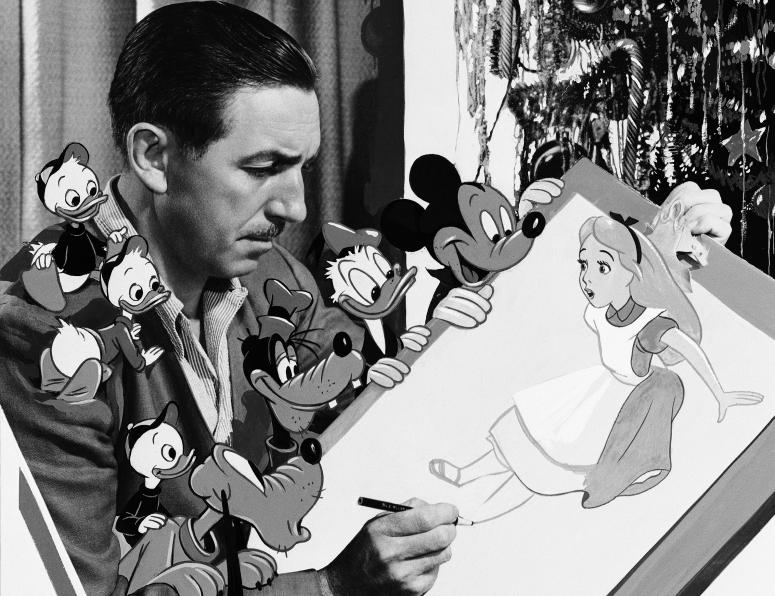
“All our dreams can come true, if we have the courage to pursue them” – Walt Disney
As we move forward in business planning for next year, one way to gain new perspective is to “model” someone with a genius success strategy . NLP master Robert Dilts studied Walt Disney’s planning strategy through the lens of NLP to uncover the fundamental process of all genius: the ability to take something that exists only in VISIONARY REALITY and solidify it into PHYSICAL REALITY to fulfill Life Intentions. The Disney term “Imagineering” means turning dreams into reality.
We all have strategies that we run, from brushing our teeth to how we run a business. In NLP, it’s useful to study the mental maps of people like Walt Disney and model the process for our own success. When we build a business/life plan we are using mental abilities to reorganize the world around us in a way that pleases us and pleases those we serve.
Walt Disney’s strategy involved three perceptions that worked hand in hand with each other. Simply put, they were the dreamer, the realist and the critic. Just like a play or storyboard, he would wear each of those hats and ask his team to do so as well. This involved using three physical positions to separate the perceptions. He would have his team go into three different rooms or sit in three chairs.
Shall we try it? (Essential to this process is having a physical space for each part that is separate)
Place three sheets of paper on the floor of your office in different corners. Write on them with a pen or sharpie and make one the dreamer, one the realist and one the critic. YOU WILL ACCESS THEM ONE AT A TIME. Don’t rush through this, do it thoughtfully for a breakthrough.
1. Step into the dreamer position. Think about your big goals, and what that looks like a year from now, 5 years from now, 10 years from now. Dream without limits! When was the last time you allowed this to flow? Imagine what it would be like to be on a stage with thousands clapping for you as you win your award? See it, hear and feel it.
2. Now step into the realist position. Look at this through your senses as someone who is actually doing the things you dream about. Experience the action. What would someone who is going to Spain next year see, feel and experience and what would they be doing in physical reality to bring it to life? What plan would they make?
3. Now step into the critics role. Think of a movie critic and you have just presents the story board of your business/life plan. The critic may ask “what’s missing? Or does it work? Does it look right, does it feel right? The purpose of the critic is to make sure that something meets certain criteria and in combination with the dreamer and the realist can create something very extraordinary with very high standards.
If the idea is still alive after the critic looks at it, it then returns to the dreamer position for the work on the project to continue.
One of Disney’s colleagues said, ” …there were actually three different Walts: the dreamer, the realist and the spoiler. you never knew who was coming into your meeting.”
We all know that outcome and legacy of this strategy for Walt Disney. Creativity requires the roles of all three phases that can support each other.
Watch this video as a young girl with a dream goes through the Disney Creative Process.http://www.youtube.com/watch?v=iMMTsbF5KnE